
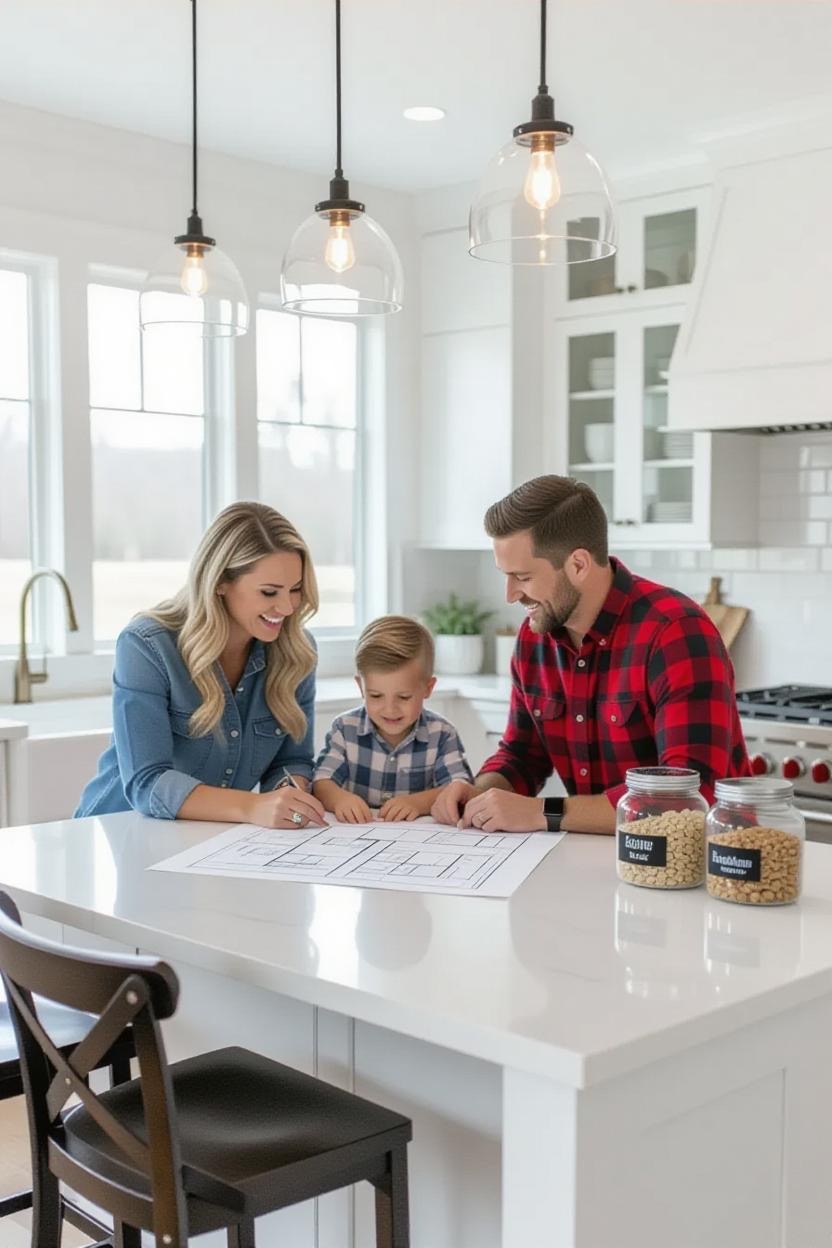
Building a new home is an exciting milestone, but it’s also one of the biggest financial commitments you’ll ever make.
If you’re like most prospective homeowners in the Collinsville or Gainesville, TX area, your top question is likely:
“How much will it really cost to build a new home in North Texas?”
This isn’t just a casual question – it’s a major concern echoed across Google searches and YouTube tutorials,
where millions seek advice on avoiding budget blowouts.
According to popular searches, queries like “new home construction costs” and “hidden fees in building a house” dominate,
with homeowners fearing unexpected expenses that can add 10-20% to the total price.
In this guide, we’ll solve that problem head-on by breaking down how to create a realistic budget, identify common pitfalls,
and navigate local factors in North Texas.
Drawing from years of experience at Jeff Polley Construction, we’ll provide actionable steps to ensure your dream home doesn’t turn into a financial nightmare.
Step 1: Start with the Basics – What Goes into Your Base Budget?
The foundation of any new home budget is understanding the core costs.
Nationally, the average cost to build a new single-family home ranges from $100 to $200 per square foot, but in North Texas, expect $150-$250 per square foot due to regional material and labor prices. For a 2,000-square-foot home, that’s roughly $300,000-$500,000 before extras.
First, factor in land acquisition.
In the Collinsville/Gainesville area, lots can cost $50,000-$150,000 depending on size and location—rural plots near Lake Ray Roberts might be cheaper, but proximity to I-35 could drive prices up.
Don’t forget site preparation: Clearing land, grading for proper drainage (crucial in our clay-heavy soils), and installing utilities like water, sewer, and electricity can add $10,000-$30,000.
Texas’s expansive soils often require engineered foundations, such as pier-and-beam or post-tension slabs, which might tack on another $5,000-$15,000 to prevent cracking from soil shifts.
Next, consider the structure itself.
Framing, roofing, and exterior finishes form the bulk of costs.
In our hot, humid climate, opt for energy-efficient materials like insulated concrete forms (ICF) or metal roofing to combat summer heat— these can save on long-term utility bills but increase upfront costs by 5-10%. Windows and doors should be impact-resistant for hail storms common in North Texas, adding $5,000-$10,000.
Interior basics include plumbing, electrical, HVAC, and drywall.
A standard HVAC system suited for Texas summers might run $8,000-$12,000, while basic plumbing and electrical could add $15,000-$25,000.
To avoid surprises, get detailed quotes early.
At Jeff Polley Construction, we provide transparent breakdowns, ensuring clients know exactly what’s included in the base price—no vague estimates here.
Step 2: Uncover Hidden Costs – The Sneaky Expenses That Derail Budgets
One of the most searched topics on YouTube (think channels like Matt Risinger’s The Build Show or Essential Craftsman) is “hidden costs in home building.”
These aren’t always “hidden” per se, but they’re often overlooked by first-time builders.
Permits and inspections alone can cost $2,000-$5,000 in Denton County, where Collinsville and Gainesville fall.
You’ll need building permits, septic approvals (if not on city sewer), and environmental assessments, especially if your lot is in a floodplain near the Red River.
Utility hookups are another big one.
Extending power lines or digging wells in rural areas can exceed $10,000.
In North Texas, water scarcity means impact fees for new connections—expect $5,000-$15,000 from local utilities like CoServ or Atmos Energy.
Upgrades and customizations inflate budgets quickly.
Standard builder packages might include basic appliances and finishes, but upgrading to granite countertops, smart home wiring, or luxury flooring can add $20,000-$50,000.
Landscaping, required for erosion control in Texas, might cost $5,000-$15,000, including sod, irrigation, and trees to comply with local ordinances.
Financing fees are often underestimated.
Construction loans have higher interest rates (4-7%) than traditional mortgages, plus origination fees of 1-2%.
If delays occur—common due to supply chain issues or weather—interest accrues longer.
Closing costs, appraisals, and title insurance add another 2-5% of the loan amount.
To solve this, build a 10-15% contingency fund into your budget.
Popular Google advice from sites like NewHomeSource emphasizes this: Always overestimate.
Track everything with tools like spreadsheets or apps recommended in YouTube tutorials from Perkins Builder Brothers, who stress documenting changes to avoid “change order” fees that can spiral.
Step 3: Local Factors in North Texas – Tailoring Your Budget to Texas Realities
North Texas presents unique challenges that amplify costs, as highlighted in trending searches like “building a home in Texas clay soil.”
Our region’s blackland prairie soil expands and contracts with moisture, leading to foundation issues if not addressed—potentially $10,000 in repairs down the line.
Work with builders experienced in soil testing and stabilization; at Jeff Polley Construction, we prioritize geotechnical reports to prevent this.
Weather plays a role too.
Tornado season means reinforced structures, and summer heat demands superior insulation (R-30 minimum in attics).
Energy codes from the Texas State Energy Conservation Office require efficient builds, but going beyond—like solar panels—can qualify for rebates via programs like Oncor’s incentives, saving $2,000-$5,000.
Regulations vary by county.
In Cooke County (Gainesville), zoning might restrict lot sizes, while Denton County (Collinsville) has stricter septic rules.
HOA fees in new developments add $200-$500 monthly for amenities like community pools—factor these into long-term affordability.
YouTube channels like The Construction Channel often showcase Texas builds, emphasizing hurricane-rated materials even inland.
Use these for inspiration, but consult local pros for compliance.
Step 4: Practical Tips to Avoid Budget Surprises and Stay on Track
To truly solve the budgeting puzzle, proactive planning is key.
Start with a detailed cost estimate from your builder—insist on line-item breakdowns.
Research via Google Trends shows “new home builder questions” spike around references and warranties; ask for both to gauge reliability.
Choose a reputable builder early.
Look for those with NAHB (National Association of Home Builders) affiliations, like Jeff Polley, who offers fixed-price contracts to lock in costs amid inflation.
Avoid low bids that skimp on quality, leading to costly fixes.
Monitor progress with regular site visits and apps for expense tracking.
Set milestones: 20% at foundation, 30% at framing.
For financing, pre-qualify with lenders familiar with construction loans, and explore USDA loans for rural North Texas areas.
Finally, educate yourself.
Watch YouTube series like Essential Craftsman’s “Spec House Build” for real-world timelines (6-12 months in TX), or read forums like Reddit’s r/Homebuilding for peer advice on overruns.
How Jeff Polley Construction Can Guide Your Budget
As a local expert in Collinsville and Gainesville, Jeff Polley Construction specializes in transparent, client-focused builds.
We’ve helped dozens avoid pitfalls by providing upfront cost analyses, local vendor partnerships for discounts, and customizable plans that fit your budget.
Whether it’s a modest ranch or a custom estate, we emphasize value—energy-efficient designs that lower utility bills by 20-30%.
Contact us for a free consultation to map out your costs accurately.
In conclusion, budgeting for a new home build doesn’t have to be overwhelming.
By addressing the top question—”How much will it cost?”—with a clear plan for base expenses, hidden fees, local tweaks, and smart strategies, you’ll build confidently.
In North Texas, where land is plentiful but challenges like soil and weather loom, knowledge is your best tool.
Start today, and turn that dream into a reality without the financial stress.
2 thoughts on “The Ultimate Guide to Budgeting for Your New Home Build in North Texas”
Wow! This is good to know.
I’m wondering how much it would cost to build a tiny pre-fab home (but that still has 3 bedrooms) on one acre of land in rural Cooke county?
And do you have to pay for easements and roads?
For a tiny pre-fab home, you’re looking at $240,000 to $400,000 to include the house, the land, and site development depending on features.
For a new build in a rural area, you will be responsible for building a driveway from the public road to your home.
Gravel is the most affordable option, costing $1.25 to $4 per square foot.